
English| EUR
Suggested for you
More currencies
Choose a language
Rethymno Old Town's narrow Venetian lanes thread together centuries-old tavernas, family-run bakeries, and produce vendors whose stalls have anchored the same corners for generations. A walking food tour here is less about curated stops and more about reading the rhythm of the neighborhood—where locals queue for bougatsa at dawn, which cellars age their own raki, and how the scent of slow-cooked stifado marks the approach to a kitchen worth trusting. This guide maps the edible landmarks, explains what to look for, and gives you the working knowledge to build your own route through one of Crete's most intact culinary districts.
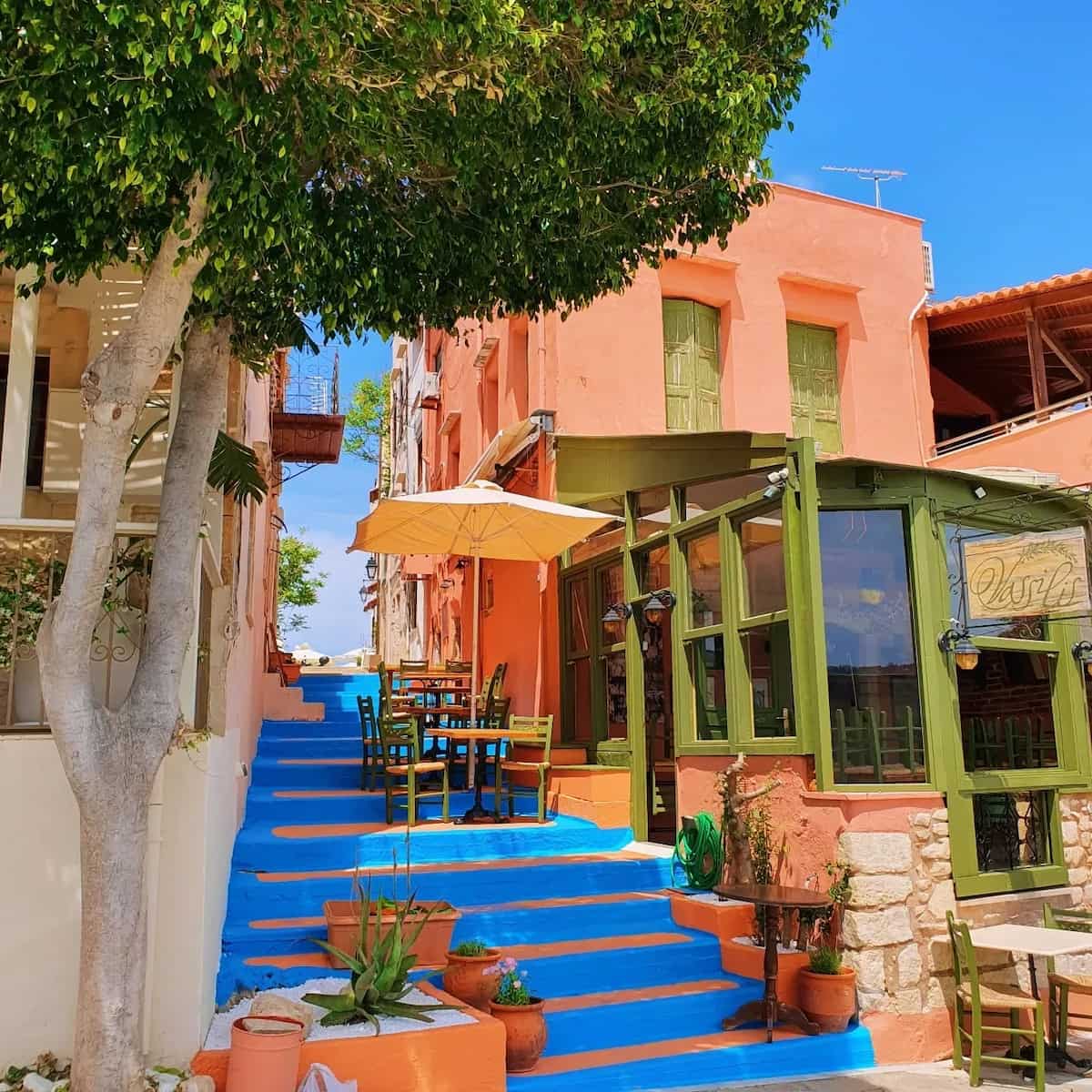
Quick answer
A rethymno walking food tour typically covers two to three kilometers through Old Town's Venetian and Ottoman quarters, linking markets, bakeries, tavernas, and specialty producers across a route that takes three to four hours at a tasting pace. The public streets and lanes are open daily, and most food vendors operate from morning through evening, with bakeries opening earliest and tavernas serving late. Free entry to the district itself means you pay only for what you taste, and timing your walk between mid-morning and early evening ensures the widest selection of active kitchens and open stalls.
The first rethymno walking food tour most visitors attempt is too short. They trace the harbor loop, stop at one visible taverna, and call it done. The district's actual culinary map runs deeper—into the web of lanes behind Rimondi Fountain, through the morning produce market near Tessaron Martyron, and along the shadowed arcades where cheese vendors and spice merchants operate from stone-vaulted rooms that predate the street grid above them. Understanding that geography is the difference between a photo walk with a snack and a route that reflects how the neighborhood actually eats. Rethymno Old Town was built to pack commerce into minimal space, and that density survives in its food infrastructure. Bakeries occupy ground floors of Venetian townhouses, their ovens fed through alley-side hatches. Tavernas share walls, their kitchens stacked in adjoining courtyards, and the scent of one kitchen's charcoal grill mingles with the next taverna's simmering tomato base. This compression rewards the pedestrian—every turn surfaces another vitrine of pastries, another hand-lettered menu, another cellar door propped open to reveal barrels and hanging cured meats. The challenge is not finding food but choosing a sequence that respects your appetite and the neighborhood's operational cadence. Start with structure. The central market hub—bounded by Arkadiou Street and the small squares near the Venetian Loggia—concentrates morning energy. Bakeries release their first trays of kalitsounia and bougatsa between seven and nine, and by mid-morning the cheese and olive vendors have their full stock displayed. This is tasting at its most transactional: you point, they cut a sample, you buy or you nod thanks and move on. The transaction is faster than the language barrier, and the quality is legible in the queue of locals. By late morning, shift toward the tavernas that serve as neighborhood anchors rather than harbor-facing tourist traps. Look for handwritten daily specials, for kitchens visible from the dining room, for tables occupied by older residents eating alone with a newspaper. These are the places that cook one pot of stifado or lamb with artichokes each day, serve it until it is gone, then close. Order the daily plate, not the menu's English section, and you will eat what the kitchen is actually proud of. The Cretan culinary identity—slow braises, wild greens, unsweetened cheese pies, olive oil used as a finishing sauce rather than a cooking fat—is clearest in these rooms, where the cooking has not been edited for foreign expectations. The district remains accessible throughout the day, but the best tasting windows align with kitchen rhythms rather than landmarks. Late afternoon brings a lull—shops close for the traditional break, and kitchens prep for the evening service. Use that gap to walk the residential lanes, trace the fortification walls, and locate the next evening's targets. By seven, the tavernas reopen, grills are lit, and the neighborhood's second culinary shift begins. This is when to sit longer, order multiple small plates, and let the meal stretch across the cooling evening.
“The district's culinary map runs deeper than the harbor loop—into the web of lanes where cheese vendors and spice merchants operate from stone-vaulted rooms that predate the street grid above them.”
This three-hour route suits walkers who want to connect Rethymno's food culture to the architecture and commerce of the Old Town. Begin at the Venetian harbor and work inland through market lanes and residential quarters.
Start at the harbor's edge near the Fortetsa fortress; walk the quayside where fish was historically landed and processed. Allocate twenty minutes to orient and photograph the waterfront.
Follow Arkadiou Street inland to the seventeenth-century Rimondi Fountain, a historic water source surrounded by bakeries and spice shops. Spend thirty minutes exploring the lanes branching north and south.
Locate the covered market hall two blocks west of Arkadiou; stalls sell produce, cheese, and olive oil from regional suppliers. Allow forty minutes to walk the aisles and speak with vendors.
Move east into the quieter residential quarters where artisan workshops occupy ground floors; look for small-scale pasta makers and honey packers. Budget thirty minutes for unhurried exploration.
Circle back via the Neratzé Mosque, then explore the narrow lanes north of Ethnikis Antistaseos Street where family-run grocers cluster. Reserve forty minutes for this final loop before retracing to the harbor.
Rethymno Old Town features a dense collection of traditional establishments ranging from family-run tavernas to specialized local food shops. Visitors can access both central hubs frequented by tourists and quieter, neighborhood spots that offer more local price points.
market
Located near the edge of the Old Town, this area provides access to fresh Cretan produce, local cheeses, and herbs directly from regional vendors.
restaurant
Situated in the heart of the Old Town, this venue focuses on traditional Cretan cuisine served within a restored historical Venetian building.
restaurant
Positioned in a quiet alleyway away from the primary tourist thoroughfares, this spot specializes in Cretan slow-cooked meats and local wine.
restaurant
Located on a popular street, this traditional taverna serves standard Cretan meze and grilled dishes, often accompanied by live music.
Rethymno Old Town remains accessible to visitors throughout the week, allowing for flexible planning of your walking food tour. The public streets are open for exploration at all hours.
Rethymno Old Town is located at Old Town, Rethymno 741 00, Greece. The area is best accessed by public bus or taxi, as the historic core is primarily a pedestrian-friendly zone.
KTEL bus to Rethymno Central Station
National Road 90 (E75) to Rethymno
Drop-off at the edge of the Old Town
Walking from the Rethymno Port or nearby hotels
The Old Town streets are narrow and restricted to vehicle traffic. Visitors are advised to utilize the public bus station or designated parking areas on the outskirts of the historical district to reach the starting point on foot.
Everything you need to know about rethymno walking food tour
A rethymno walking food tour typically involves wandering through the narrow, historic streets of the Old Town while sampling traditional Cretan flavors. Participants discover authentic ingredients, local recipes, and the deep-rooted cultural heritage of this coastal landmark. These guided experiences provide context to the region's culinary history and are led by individuals familiar with the local food scene. You will encounter various tavernas and artisan shops showcasing products like extra virgin olive oil and artisanal cheeses.
While independent exploration is possible, booking a structured culinary experience ensures you gain access to curated tastings and expert knowledge about regional ingredients. We recommend checking availability for your preferred dates through the official Rethymno site to ensure a seamless experience. Planning ahead allows you to coordinate your visit with other activities in the city.
The streets and public areas of Rethymno Old Town do not charge an entrance fee, meaning you can access these historic districts for 0 EUR. While the public space is free, participating in a specific organized food tour usually requires a separate booking for the services and tastings provided.
Families are generally welcome on these walking excursions, as they provide an engaging way for children to learn about Greek culture and food traditions. It is advisable to review the specific requirements of your chosen activity provider regarding age suitability and accessibility. The compact nature of the Old Town makes it manageable for most visitors, though comfortable walking shoes are recommended.
The best arrival window for exploring the area and participating in local activities is between 09:00 and 19:00. This period offers the most daylight for viewing Venetian architecture and ensures that local shops and markets are active. Visiting within this timeframe provides the optimal balance of vibrant atmosphere and accessibility.
Yes, you are encouraged to continue wandering through the Old Town after your organized group event concludes. Rethymno Old Town remains accessible throughout the week, with visiting hours extending from 00:00 to 23:59. Taking additional time to revisit the fountains, alleys, and historic architecture allows for a deeper appreciation of the city's character.